
When college students and job seekers in India consider private sector careers, Information Technology often dominates the conversation. Yet, India’s Banking, Financial Services, and Insurance (BFSI) sector represents an equally colossal employment powerhouse, hiring over 150,000 graduates annually across retail, wealth advisory, and corporate finance.
Driven by rapid digital banking adoption, unified payments (UPI), expanding mutual fund penetration, and massive private capital investments, private commercial powerhouses—including HDFC Bank, ICICI Bank, Axis Bank, Kotak Mahindra Bank, IndusInd Bank, and Bajaj Finance—are aggressively expanding their workforce in metropolitan hubs like Mumbai, Delhi NCR, and Bengaluru, as well as tier-2 and tier-3 business centers.
Contrary to common misconceptions, a career in private banking is not restricted to commerce graduates or accounting majors. Today, private banks hire engineers, BBA, B.Sc, and humanities graduates for roles ranging from high-touch relationship management to algorithmic credit modeling. In this master guide, we explore the primary BFSI career verticals, entry pathways for freshers, certified regulatory credentials, and realistic compensation ladders.
1. The Four Primary Career Verticals in Indian Private Banking
Private banking institutions are organized into four distinct operational divisions, each requiring specific skill sets, temperaments, and qualifications:
🏛️ THE 4 PILLARS OF BFSI EMPLOYMENT:
1. Retail & Branch Banking: Branch Operations, Customer Service, Retail Asset Sales, Teller Management.
2. Wealth Management & Advisory: Portfolio Management, High-Net-Worth (HNI) Relationship Management, Mutual Funds.
3. Corporate & Wholesale Banking: Working Capital Financing, Credit Analysis, Syndicated Lending, Trade Forex.
4. FinTech, Risk & Digital Lending: Underwriting Algorithms, Credit Scoring Models, AML/KYC Compliance, Digital Channels.
Vertical 1: Retail & Branch Banking (The Customer Gateway)
Common Designations: Customer Service Officer (CSO), Branch Relationship Officer, Assistant Branch Manager, Branch Manager.
Compensation Benchmark: ₹3.2 LPA to ₹6.5 LPA (Entry to Mid) + Quarterly Sales Incentives.
Core Deliverables: Retail branch banking is the public engine of the bank. Professionals in this vertical manage daily customer inquiries, open savings and current accounts, disburse retail loans (home, auto, personal), and cross-sell third-party financial products like mutual funds and term insurance. This vertical is ideal for extroverted communicators who excel at client rapport.
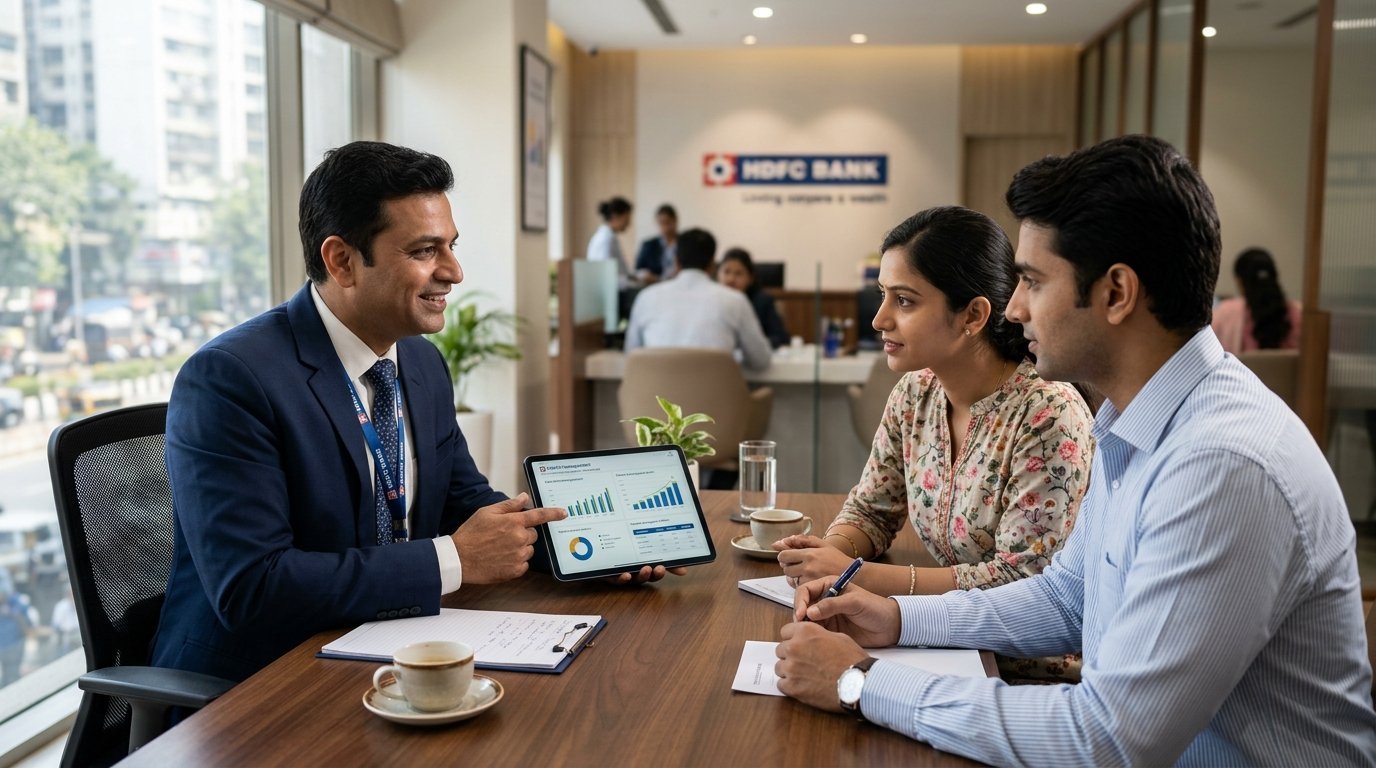
Vertical 2: Wealth Management & Private Banking (High-Net-Worth Advisory)
Common Designations: Premier Relationship Manager, Investment Counselor, Wealth Advisory Associate, Private Banker.
Compensation Benchmark: ₹6.0 LPA to ₹14.0 LPA + Substantial Performance Bonuses.
Core Deliverables: Wealth managers oversee investment portfolios for affluent individuals (HNIs) and family offices holding liquid balances exceeding ₹25 Lakhs to ₹5 Crores. You formulate asset allocation strategies across equities, debt funds, sovereign gold bonds, and structured fixed-income products. High interpersonal sophistication and regulatory knowledge are essential.
Vertical 3: Corporate & Wholesale Banking (Enterprise Finance)
Common Designations: Credit Analyst, Corporate Relationship Manager, Trade Finance Specialist, Treasury Associate.
Compensation Benchmark: ₹7.5 LPA to ₹18.0 LPA.
Core Deliverables: Rather than dealing with individual consumers, wholesale bankers service mid-sized corporations and multi-crore enterprises. You evaluate audited balance sheets, calculate financial debt-service ratios, structure letter-of-credit (LC) guarantees, and facilitate overseas foreign exchange hedging. This vertical demands strong financial accounting and analytical modeling skills.

Vertical 4: FinTech, Digital Lending & Risk Analytics
Common Designations: FinTech Product Manager, Credit Underwriting Specialist, Fraud Analytics Manager, AML Officer.
Compensation Benchmark: ₹8.0 LPA to ₹20.0 LPA.
Core Deliverables: The intersection of technology and finance. Teams in this vertical develop instant digital loan approval algorithms, monitor suspicious transactions under anti-money laundering (AML) guidelines, and optimize digital banking apps. Engineering and data analytics graduates frequently enter BFSI through this high-growth track.
2. Three Proven Entry Pathways for Freshers into Private Banking
Unlike public sector banks that require passing nationwide IBPS or SBI PO examinations, private commercial banks utilize three distinct hiring pathways:
Pathway 1: Bank Young Banker Programs (Guaranteed Placement)
Leading Indian private banks operate structured 1-year residential training academies in partnership with recognized educational institutions (like Manipal Global Education):
- ICICI Bank Manipal Academy (PO Program): Selected graduates undergo 4 months of classroom study, 2 months of internship, and 6 months of branch training, earning a Post Graduate Diploma in Banking Operations (PGDBO) and entering as Assistant Manager.
- HDFC Bank Future Bankers Program: A 1-year full-time program preparing fresh graduates for premier retail banking roles.
- Axis Bank Young Leaders Program: Aimed at fresh graduates seeking foundational banking leadership careers.
Pathway 2: Direct Off-Campus & Campus Hiring
Private banks conduct active off-campus recruitment drives via their career portals and professional networks. As covered in our Off-Campus Job Hunting Guide for Freshers, candidates can apply for direct openings in branch operations, telesales, and corporate operations through official career pages.
Pathway 3: Industry Certifications That Accelerate Shortlisting
Holding regulatory certifications issued by the National Institute of Securities Markets (NISM) drastically elevates your resume above other applicants:
- NISM Series V-A (Mutual Fund Distributors Certification): The statutory credential mandated by SEBI for anyone distributing or advising on mutual fund schemes.
- NISM Series VIII (Equity Derivatives Certification): Essential for equities, trading desks, and institutional advisory.
- JAIIB (Junior Associate of IIBF): Administered by the Indian Institute of Banking & Finance, recognized across banking institutions for faster promotional increments.
3. Private Banking Salary Ladder & Compensation Matrix (2026)
Compensation in private banking is structured differently from traditional IT services. Private bankers receive a guaranteed base salary supplemented by substantial quarterly sales and portfolio performance incentives:
| Experience Level | Typical Job Roles | Fixed Annual CTC | Incentive Potential |
|---|---|---|---|
| 0–2 Years (Fresher / Trainee) | Customer Service Officer, Branch Trainee, Junior RM | ₹3.20 – ₹5.00 LPA | ₹50,000 – ₹1.50 Lakhs/yr |
| 2–5 Years (Associate / Deputy Mgr) | Relationship Manager (HNI), Credit Risk Analyst | ₹5.50 – ₹10.00 LPA | ₹1.50 – ₹3.50 Lakhs/yr |
| 5–8 Years (Manager / Branch Head) | Branch Manager, Corporate RM, Senior Credit Underwriter | ₹10.50 – ₹18.00 LPA | ₹3.00 – ₹7.00 Lakhs/yr |
| 8–12 Years (AVP / Cluster Head) | Cluster Operations Head, Regional Wealth Head, Director | ₹18.00 – ₹30.00 LPA | ₹6.00 – ₹15.00 Lakhs/yr |
| 12+ Years (VP / Senior VP) | Zonal Head, Chief Risk Officer, National Practice Head | ₹32.00 – ₹65.00+ LPA | Stock Options (ESOPs) + Annual Bonus |
Note: Refer to our detailed guide on Understanding CTC vs In-Hand Salary to calculate your net take-home pay after statutory Provident Fund (12%) and New Tax Regime deductions.

4. Private Banks vs Public Sector (PSU) Banks: Which is Better for You?
When choosing your banking path, understand the fundamental trade-offs between private commercial institutions and government-owned banks (like SBI or Punjab National Bank):
| Comparison Parameter | Private Commercial Banks | Public Sector (PSU) Banks |
|---|---|---|
| Hiring Process | Direct interviews, Young Banker programs, campus drives | National competitive written exams (IBPS PO, SBI PO) |
| Promotion Velocity | High Speed. Strictly merit-based every 2–3 years | Seniority and tenure-bound departmental exams |
| Job Security | Performance-dependent (tied to targets and compliance) | High Security. Sovereign government backing |
| Work Pressure | High sales targets, cross-selling insurance and mutual funds | High customer traffic, government scheme administration |
| Top-Tier Earning Potential | ₹30 LPA to ₹1 Crore+ (Executive leaders and practice heads) | Capped by government public sector pay scales |
Frequently Asked Questions (FAQ): BFSI Banking Careers India
1. What does the BFSI sector include in India?
BFSI stands for Banking, Financial Services, and Insurance. It encompasses commercial private banks (HDFC, ICICI, Axis, Kotak), Non-Banking Financial Companies (NBFCs like Bajaj Finance), life and general insurance providers, mutual fund asset management companies (AMCs), wealth management brokerages, and modern FinTech lending startups.
2. Can non-commerce and engineering graduates get jobs in private banking?
Yes, absolutely. Over 40% of private banking hires in India come from engineering (B.Tech) and science/arts backgrounds. Engineering graduates are highly sought after for digital banking, credit risk analytics, FinTech product management, and automated algorithmic trading roles.
3. What is the typical starting salary for freshers in private banking in India?
Entry-level roles such as Branch Operations Trainee, Customer Service Officer, or Junior Relationship Manager offer starting fixed packages between ₹3.2 LPA to ₹5.5 LPA, supplemented by quarterly performance-linked sales incentives that can add ₹1 to ₹2 LPA.
4. What are Bank Young Banker Training Programs (e.g. ICICI, HDFC, Axis)?
These are structured 1-year residential training and post-graduate diploma programs conducted in partnership with academic institutions (such as Manipal Academy). Selected graduates receive classroom training, internship stipends, and guaranteed placement as Assistant Managers or Deputy Managers upon course completion.
5. Which NISM certifications are most valuable for private bank job seekers in India?
The NISM Series V-A (Mutual Fund Distributors Certification) and NISM Series VIII (Equity Derivatives Certification) are the two most recognized regulatory credentials mandated by SEBI. Holding these certifications significantly boosts your resume for Wealth Management and Relationship Management roles.
6. What is the career difference between Retail Banking and Corporate Banking?
Retail Banking caters to individual consumers (savings accounts, personal loans, credit cards, retail fixed deposits). Corporate Banking services mid-market and large conglomerate corporations (working capital loans, structured trade finance, forex hedging, and syndicated credit lines), offering steeper salary growth and lower transaction volumes.
7. How does sales pressure in private banking compare with public sector (PSU) banks?
Private banks emphasize aggressive quarterly customer acquisition and fee-income targets (selling insurance, mutual funds, and credit products). PSU banks feature lower initial sales pressure and sovereign job security, but private banks offer much faster merit-based promotion cycles and superior top-tier leadership compensation.
8. What role does Credit Risk Analysis play in private banks?
Credit Risk Analysts evaluate the financial creditworthiness of loan applicants by analyzing balance sheets, debt-service coverage ratios (DSCR), CIBIL scores, and industry macroeconomic trends to determine lending approval and interest pricing.
9. Are private bank recruitment tests similar to IBPS and SBI PO exams?
No. While IBPS/SBI government exams test high-speed pen-and-paper mental math and general awareness, private banks evaluate behavioral personality profiles, situational sales judgment, basic business aptitude, and face-to-face communication through panel HR interviews.
10. What are the promotion timelines in leading private banks like HDFC and ICICI?
High performers who consistently achieve 100%+ of their performance scorecards can secure promotions every 2 years, advancing from Assistant Manager to Deputy Manager, Manager, Senior Manager, and Vice President within 10 to 12 years.
Explore Related Career & Placement Guides on PrivateNaukriOnline:
Employment Bonds, Notice Period & BGV Rules
Understand legal enforceability, certificate retention laws, and background verification rights in India.
How to Negotiate Your Salary Offer Letter
Word-for-word counter-offer email templates, fixed vs variable tips, and joining bonus negotiation tactics.
Understanding CTC vs In-Hand Salary Breakdown
Calculate monthly take-home pay, 12% PF retirement deductions, and tax slabs from entry-level to manager tier.
How to Answer ‘Tell Me About Yourself’
The W-A-P formula (Work, Academic, Personal) with word-for-word scripts for freshers, career switchers, and professionals.
👉 Recommended Career Guides in This Series
Accelerate your private corporate career journey across Indian industry sectors:
Complete Career Roadmap in IT Services (2026 Edition)
Explore the 6-stage hierarchy ladder, developer vs architect roles, and salary benchmarks in IT services.
Understanding CTC vs In-Hand Salary in India
Calculate take-home pay, 12% PF retirement deductions, and tax slabs from entry-level to manager tier.
Top 50 Common HR Interview Questions & Answers
Master behavioral questions using the STAR framework for corporate banking and IT hiring rounds.
How to Answer ‘Tell Me About Yourself’ (7 Script Examples)
Master the Present-Past-Future formula for corporate interviews with word-for-word scripts for banking & tech roles.